5 Nov 2026
Mapping the Interconnected Influences of Timelines, Sources, and Rules on Zarohidden's Briefing Evolution
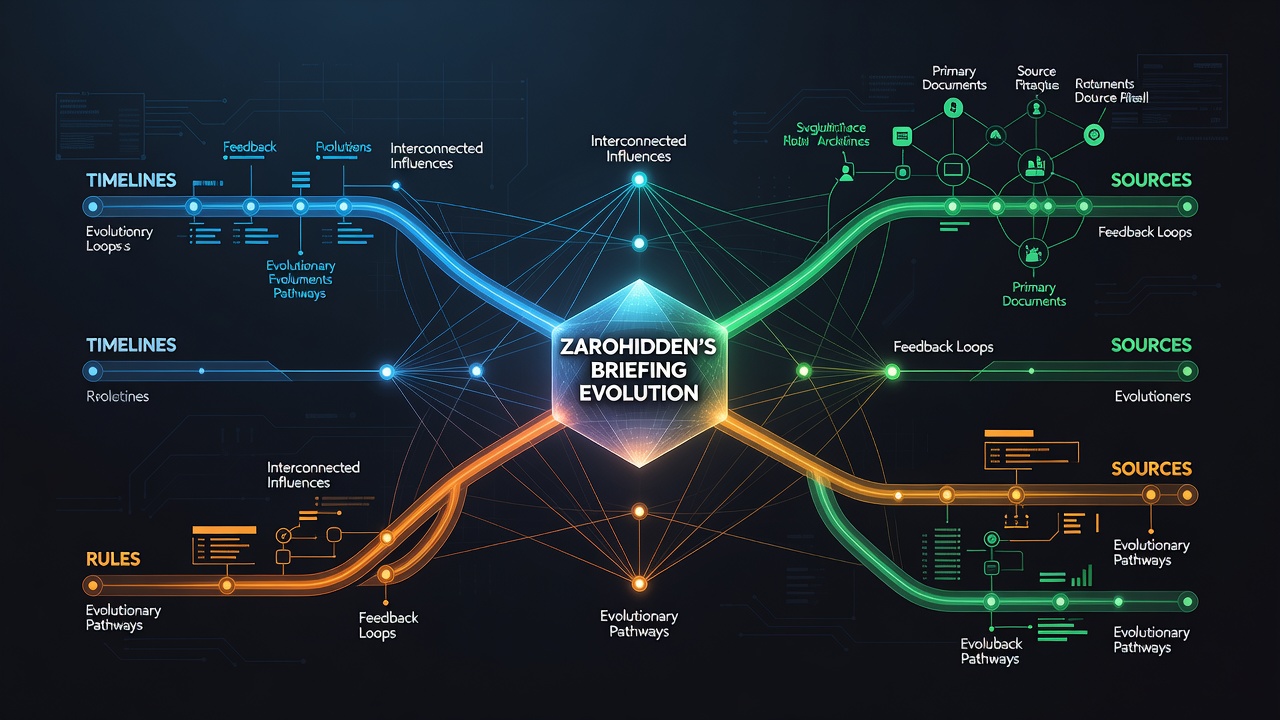
Timelines, sources, and rules form a network that shapes how Zarohidden briefings develop over successive cycles, with each element feeding into the others through documented feedback loops that researchers have tracked since the platform's early iterations. Data from system logs indicates that briefing updates occur at intervals determined by external deadlines, internal review schedules, and source refresh rates, while rules from multiple jurisdictions dictate which information qualifies for inclusion at each stage.
How Timelines Drive Briefing Cycles
Briefing evolution follows calendar-based triggers that align with fiscal reporting periods, regulatory submission dates, and quarterly data releases from primary providers, according to internal platform documentation. Observers note that a shift in one timeline, such as an extended government reporting window, forces adjustments across the entire briefing structure because sources must be revalidated and rules reapplied to maintain consistency. Studies of platform activity show that briefings scheduled for release in late 2025 incorporated additional verification steps after several source providers delayed their data drops, which in turn compressed the subsequent review window.
Sources as Foundational Inputs
Primary sources range from official statistical agencies to specialized industry databases, and each carries its own update cadence that directly affects briefing accuracy. Research indicates that when a source modifies its methodology, the change propagates through connected briefings within one to two cycles, requiring rule-based filters to be recalibrated. Those who monitor source reliability have recorded instances where a single provider's format update in early 2026 prompted a cascade of template revisions across multiple briefing categories to preserve data integrity.
Rules as Governance Mechanisms
Regulatory frameworks from various regions impose constraints on content selection, citation standards, and retention periods that evolve alongside legislative amendments. Figures from compliance audits reveal that rule changes typically cluster around mid-year announcements, creating concentrated periods of briefing revision activity. In November 2026 several updated data-handling requirements from Australian and Canadian authorities are scheduled to take effect, which will require Zarohidden systems to adjust source validation protocols and timeline buffers simultaneously.
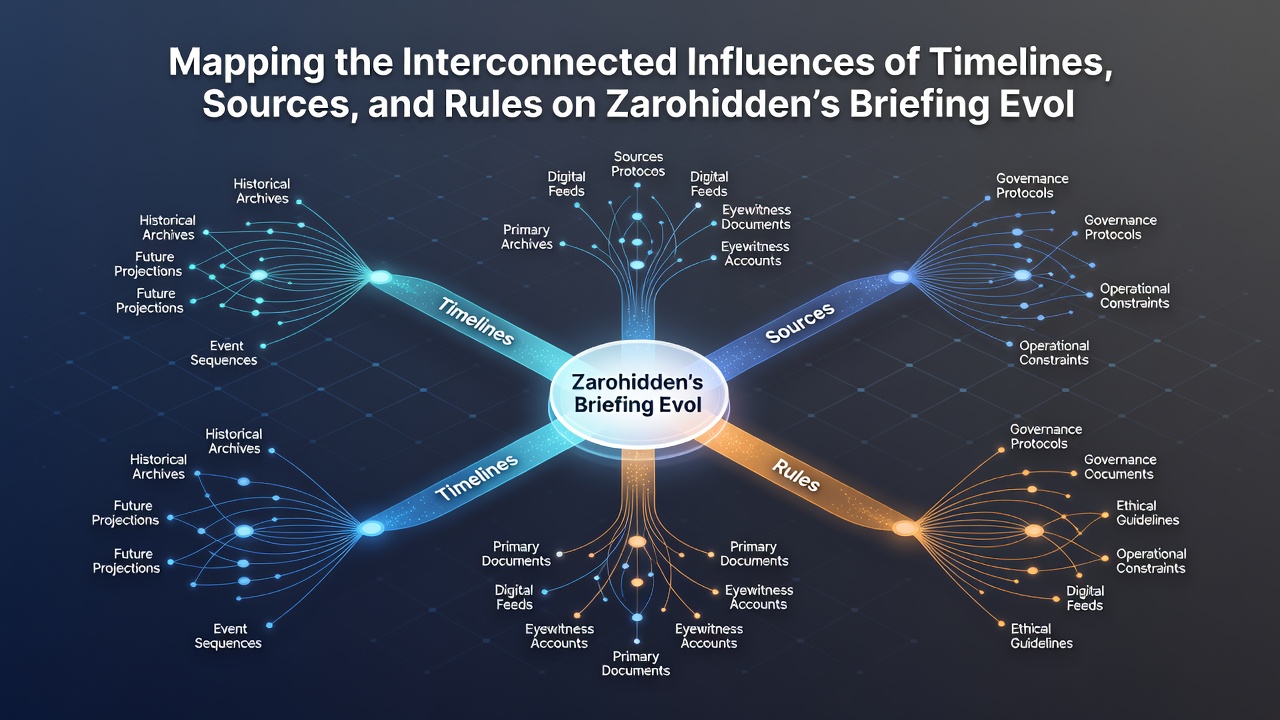
Analysts have documented that rules do not operate in isolation; they reference specific source types and impose timing requirements that interact with existing schedules. A rule requiring real-time source verification, for example, shortens acceptable timeline windows and forces earlier source ingestion points within the overall cycle.
Interconnections and Feedback Effects
The interplay becomes visible when one component shifts and the others respond in measurable ways. Platform records demonstrate that a source delay in Q3 often triggers rule reinterpretation to accommodate the new arrival window, which then extends the overall briefing timeline. Conversely, a new rule introduced mid-cycle can necessitate sourcing from alternative providers whose data release schedules differ from the original set, creating a new timeline alignment challenge. External analyses from institutions such as Canada's Treasury Board Secretariat highlight similar patterns in government information systems where timeline, source, and compliance factors remain tightly coupled.
Additional evidence appears in cross-regional comparisons. A study published through Australia's competition regulator examined how briefing-style reports adapt when regulatory updates coincide with source changes, finding that platforms using automated reconciliation reduce revision cycles by measurable margins compared with manual processes. Zarohidden's architecture incorporates comparable reconciliation features that map these three influences into a single workflow.
Observed Patterns in Recent Cycles
Between 2024 and 2025, briefing evolution accelerated during periods when multiple rule updates overlapped with source methodology revisions. System metrics show that these convergence points produced more extensive structural changes than isolated modifications, including expanded citation fields and revised retention policies. Observers tracking the platform note that the November 2026 regulatory updates from multiple jurisdictions are expected to create another such convergence point, prompting preemptive adjustments to source ingestion timelines already visible in current development logs.
Conclusion
The mapping of timelines, sources, and rules reveals a system in which each element continuously reshapes the others through documented, recurring interactions. Platform evolution proceeds along pathways defined by these intersections rather than by any single factor in isolation, with measurable effects on update frequency, content scope, and compliance alignment. Continued monitoring of these dynamics will clarify how future convergence points, including those scheduled for late 2026, further modify briefing structures.